- project
- Find Your Way To Oz
- client
- Google × Disney
- role
- Lead Developer
- year
- 2013
- live
- oz.fluuu.id
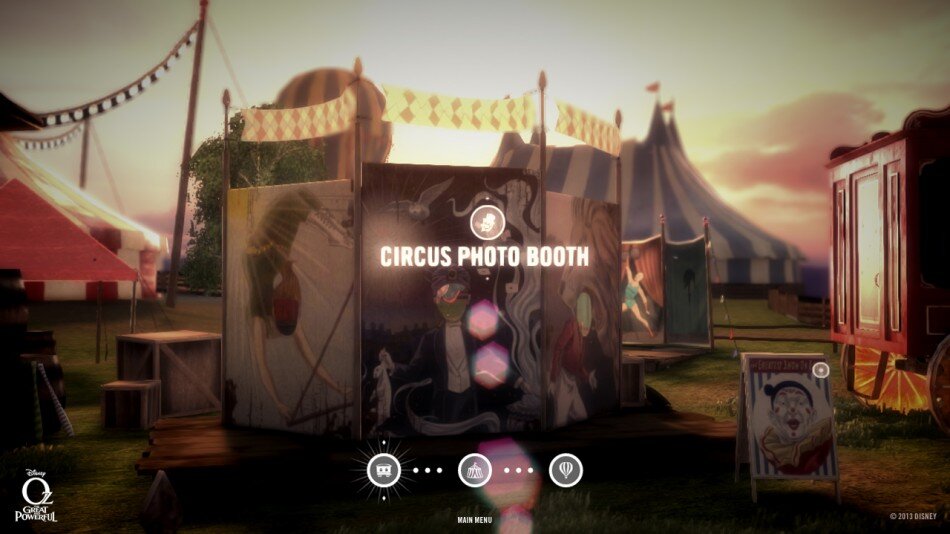
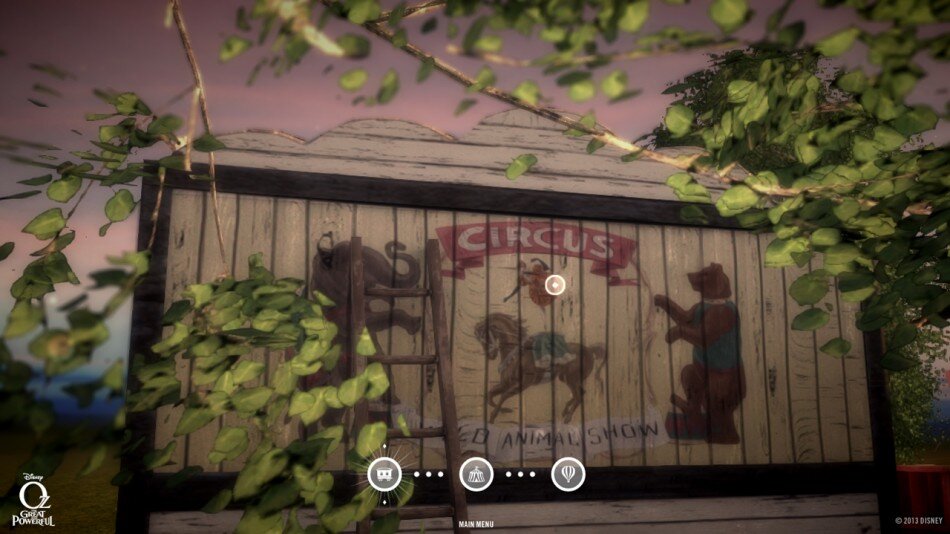
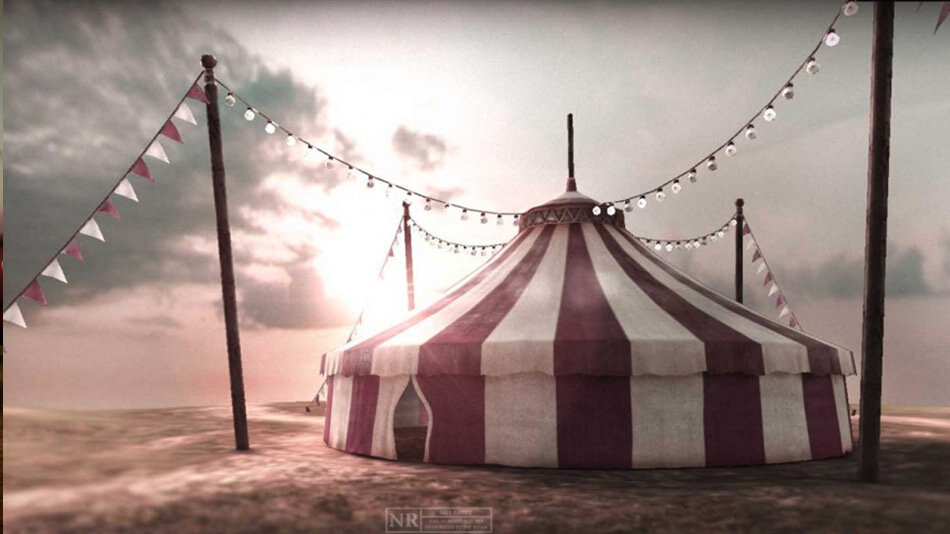
Find Your Way to Oz is a 2013 Google Chrome Experiment by UNIT9 for Google and Disney. Its five chapters — Carnival, Zoetrope, Music Box, Cutout and Storm — use distinct interaction, loading and rendering logic.
The 2026 restoration updates the development tools and browser compatibility code so the original experience can run in current browsers. Original 2013 production and 2026 restoration credits are listed separately.
Original source and restoration ↗ · Live restored experience ↗ · Prototype index ↗
Chapter architecture
Backbone.js and RequireJS coordinate chapter lifecycles; CoffeeScript, Three.js r55 and WebGL handle the visual work. The prototype index records experiments for terrain loading, cameras, wind, post-processing and media that were developed into chapter techniques.
Storm
Storm uses a volumetric GLSL shader adapted from a mouse brain cell animation. Around it, the scene combines a tornado render target, background mesh, tornado composite, front pass, god rays and colour correction. Wind, debris and funnel are visual constructions for the chapter.
Restoration
The restoration updates media and audio behavior, interaction policies, texture and canvas behavior, and the Storm entry controls. It retains the original scene architecture, creative relationships and shader attribution.
Find Your Way to Oz · original system and restoration
The 2013 experience composed five interactive chapters into one browser journey. Each chapter handled its interaction and rendering while shared loading and scene routing connected the experience.
- 01Oz journey Scene router
chapter transition
- 02Scene router Chapter modules
load scene module
- 03R&D prototypes Storm compositor
validated technique
- 04Chapter modules Storm compositor
Storm chapter
- 05Chapter modules Chrome browser
WebGL render
- 06Storm compositor Chrome browser
composited frame
Oz journey · Five browser chapters
The original public experience moves from the Kansas carnival through Zoetrope, Music Box, Cutout and Storm.
Scene router · Backbone + RequireJS
The original application used a Backbone and RequireJS structure to move between chapter lifecycles.
Chapter modules · Interaction + render loops
Each chapter has its own loading, interaction and rendering concerns.
R&D prototypes · Focused technical tests
Browser experiments tested terrain, camera, media, wind and post-processing before composition.
Storm compositor · Layered WebGL passes
The storm combines ordered render targets, scene layers and post-processing. The case attributes the tornado shader.
Chrome browser · 2013 WebGL platform
The original release was made for the browser capabilities and compatibility assumptions available at the time.
Isolate experimental scene work until it can join the experience. This view records the original application structure.
Build log
2013 Five-chapter browser journey
original releaseEach chapter required distinct loading, rendering and interaction behavior.
+ shipped
- Carnival, Zoetrope, Music Box, Cutout and Storm modules
- Backbone and RequireJS scene lifecycle structure
- prototypes for terrain, camera, media, wind and post-processing
- layered WebGL storm compositor
→ what it exposed
The journey combined several rendering and interaction systems.
↑ what it unlocked
Prototypes became scene techniques after chapter testing.
traceprototypeisolate a browser questionchapterown interaction + render loopscene routercompose the journeybrowserpresent the experience2026 Restore current-browser access
restorationBrowser APIs, interaction policies and local development tooling had changed.
+ shipped
- current local development and build seam
- compatibility work for changed browser behavior
- restored Storm interaction controls
- public entry in current browsers
→ what it exposed
The original application required targeted compatibility work.
↑ what it unlocked
The preserved project can run again without changing its 2013 production credit.
trace2013 sourceretain chapter and asset lineagetoolingreplace obsolete local seamcompatibilitypatch browser boundarieslive experiencerestore public entry
Credits and rights
The original 2013 experience was produced by UNIT9 with Google and Disney; Silvio Paganini was original Lead Developer. The 2026 restoration is credited separately above. Names, brands, artwork, characters, footage and associated rights remain with their respective owners.